smallapps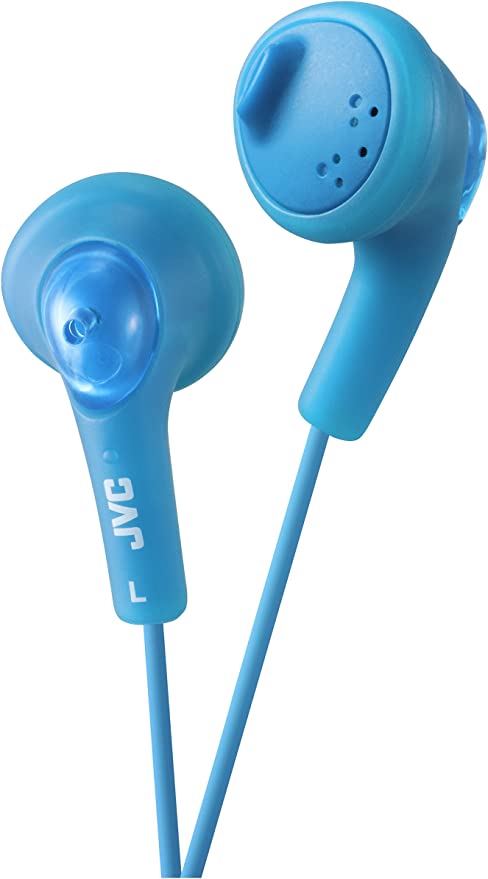

In the age of $200 wireless earbuds that become e-waste once their internal batteries die, the JVC HA-F160-A Gumy offers a different kind of proposition: honest disposability. Priced typically under $10, it does not pretend to be an heirloom item. It is a utility, a backup, a “break-glass-in-case-of-emergency” tool. However, understanding its physical limitations—specifically regarding its cable—is crucial for user satisfaction.
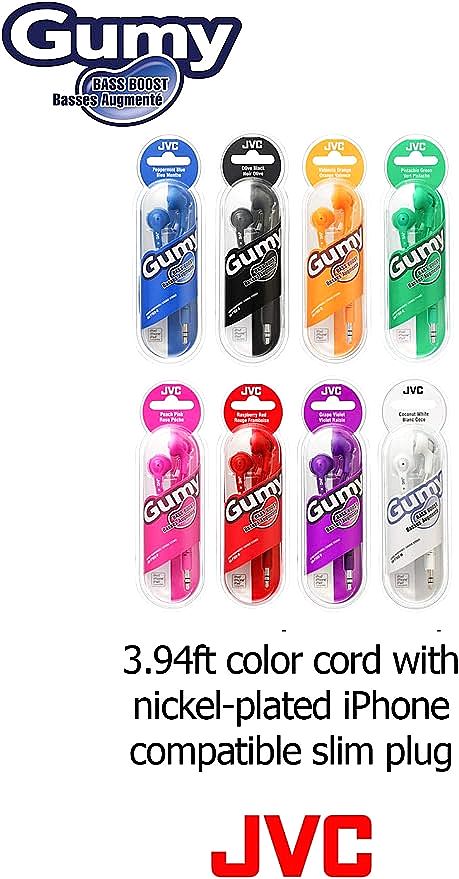
The 3.3-Foot (1.0m) Constraint
One spec sheet detail often overlooked until it’s too late is the cord length: 3.3 feet (1.0 meter).
* The History: This length is a relic of the MP3 player era. It was designed when devices were clipped to shirt collars, armbands, or carried in breast pockets.
* The Reality: For a modern user carrying a smartphone in a front jeans pocket, 1.0 meter is barely enough. If you are tall (over 6ft), or if you put the phone in a backpack, the cable will be under constant tension (Thesis).
* The Failure Mode: This constant tugging exerts stress on the weakest points: the solder joints at the plug and the driver entry. This geometric mismatch is a leading cause of premature failure in these units. If you plan to use these with a device in your pants pocket, you are physically stressing the hardware with every step (FMEA).
Nickel vs. Gold: The Connector Choice
The JVC Gumy features a nickel-plated slim plug. High-end audio gear often uses gold plating because gold is highly conductive and does not oxidize. So, is nickel a downgrade?
* The Physics: Nickel is harder than gold. For a plug that will be inserted and removed thousands of times into dirty jacks on planes, school Chromebooks, and old gym machines, nickel offers superior wear resistance (Physics).
* The Conductivity: While nickel is less conductive than gold, the difference in signal transmission for a 16-ohm consumer earbud is electrically negligible. The bottleneck is the driver fidelity, not the plug conductivity. JVC made the correct engineering choice here: prioritizing durability over theoretical conductivity for a budget product (Expert Nuance).
The Economics of “Disposable” Audio
From a consumer behavior standpoint, the Gumy occupies a unique niche: the “High-Risk Environment” headphone.
* Scenario: You wouldn’t take your AirPods Pro kayaking, or lend them to a 6-year-old, or leave them plugged into a library computer. The JVC Gumy is designed for these scenarios.
* Cost Analysis: If a pair lasts 6 months before the inevitable cable fatigue sets in, the cost of ownership is roughly 1.30 per month. Compared to the risk of losing a single 125 wireless earbud, the Gumy offers a form of “financial insurance.” It is the Bic lighter of the audio world—reliable enough to work, cheap enough to lose (Data).
Durability Reality Check
Let’s be forensic: the internal wiring of the Gumy is extremely thin gauge copper, likely enamel-coated Litz wire. It lacks the Kevlar reinforcement found in braided cables. It does not have heavy-duty strain relief springs. It is a simple, unshielded cable.
* The Verdict: Durability is not achieved through rugged materials, but through simplicity. There are no batteries to degrade, no Bluetooth chips to overheat, and no hinges to crack. The only moving part is the diaphragm. If you treat the cable with basic respect (don’t wrap it tightly around the player, don’t yank the cord), the driver itself will likely outlast the battery of any Bluetooth headphone on the market.
In summary, the JVC Gumy is a product defined by its limitations. The short cord restricts how you carry your device, and the thin gauge wire demands care. But for the price of a sandwich, it provides a reliable, battery-free audio connection that fits where others don’t.