 smallapps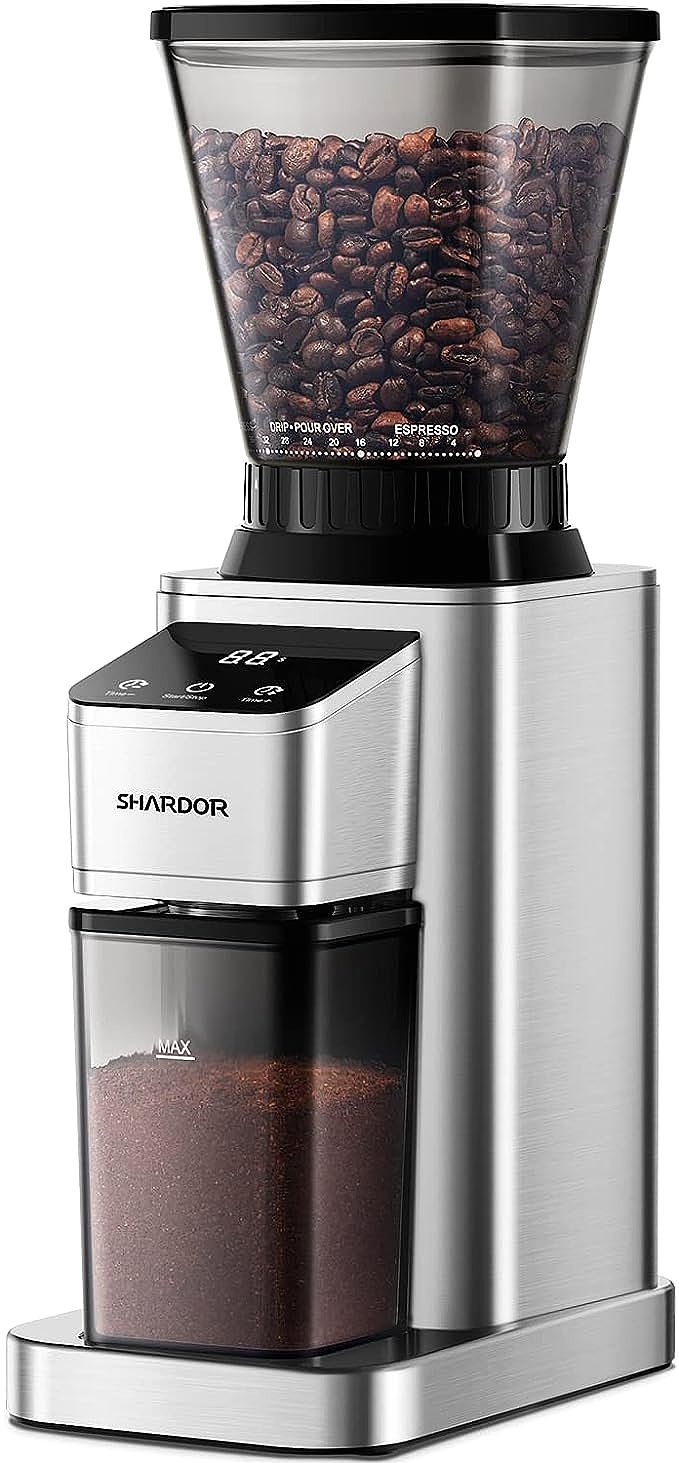
It’s a familiar morning scene for any home barista. You weigh your beans with precision, anticipating a perfect pour-over. But as you pull the catch bin from your grinder, chaos erupts. Coffee chaff leaps onto the counter, fine grounds cling stubbornly to the plastic walls of the bin, and a cloud of dust coats your hand. This isn’t just a cleaning annoyance; it’s a symptom of a physics problem happening inside your machine—one that is quietly robbing you of flavor and consistency.
This phenomenon, known as the triboelectric effect, is the nemesis of precision brewing. While industrial coffee roasters have battled it for decades, only recently has effective anti-static technology migrated to consumer-grade appliances. Understanding why this happens—and how modern engineering is solving it—is key to elevating your daily ritual from a messy chore to a refined craft.

The Physics of the Grind
To understand the mess, we have to look at what happens when a coffee bean meets a burr. Grinding is a violent process of friction and fracture. As beans are crushed against stainless steel or ceramic burrs, electrons are stripped from one surface and deposited on another. This exchange creates a static charge. Coffee grounds, being organic insulators, hold onto this charge with frustrating tenacity.
The intensity of this static storm depends on several variables. Darker roasts, which are more brittle and have lower moisture content, tend to shatter into charged particles more readily than lighter roasts. Environment plays a role too; research shows that relative humidity levels below 40% significantly increase static buildup. This is why your grinder might behave perfectly in July but become a nightmare in January. The result is “retention”—coffee that stays stuck in the grinder’s chute rather than falling into your basket. Industry data suggests that without mitigation, retention can account for 1-2% of your dose. In a 20-gram espresso shot, losing 0.4 grams to the chute doesn’t just waste coffee; it skews your brew ratio and leaves stale grounds to contaminate tomorrow’s cup.
Engineering the “Zero Mess” Solution
For years, enthusiasts relied on the “Ross Droplet Technique” (RDT)—flicking a drop of water onto beans before grinding to dissipate charge. While effective, it introduces moisture to the burrs, risking corrosion over time. The hardware solution is far more elegant: integrating anti-static paths directly into the grinder’s design.
This approach is exemplified by the SHARDOR CG203S Anti-static Conical Burr Coffee Grinder. Rather than relying on the user to manage the environment, the device uses conductive materials and airflow design to neutralize the charge as the coffee exits the burrs. By providing a path to ground for the static electricity, the grounds fall vertically rather than spraying outward. This engineering choice directly addresses the “flyaway” effect. When the catch cup is removed, the grounds sit in a neat mound, preserving the exact weight you intended to brew. This “mess-free” capability transforms the workflow, allowing the user to focus on the aroma and the bloom rather than the cleanup.

Conical Burrs and Particle Integrity
Solving static is only half the battle; the other half is preserving the bean’s integrity during the grind. High-speed blade grinders generate excessive friction heat, which can cook the delicate volatile oils in the coffee before water ever touches them. This is why serious brewing demands a burr system.
Conical burrs, like the 40mm stainless steel set found in the SHARDOR CG203S, operate at lower RPMs than flat burrs or blades. The geometry of the cone allows gravity to assist the feed, requiring less force to crush the bean. This efficiency generates less heat, protecting the aromatic compounds—the fruity esters and floral notes—that define high-quality coffee. Furthermore, stainless steel is less thermally conductive than ceramic, meaning the burrs themselves don’t become heat sinks that scorch the grounds during longer grind cycles.
The resulting particle distribution is bimodal, meaning it produces two distinct peak sizes of grounds. For methods like pour-over and drip, this is advantageous. The larger particles provide structure to the coffee bed, allowing water to flow, while the smaller particles (fines) slow the flow just enough to ensure full extraction of the sugars and acids.
The Spectrum of Extraction
The difference between a sour, watery shot of espresso and a rich, syrupy one often comes down to microns. The ability to make micro-adjustments to grind size is what separates a specialized tool from a general kitchen appliance. “Universal” settings rarely work because the gap required for a pressurized espresso portafilter is vastly different from the coarse chunks needed for a 4-minute French Press steep.
A grinder with a wide, stepped adjustment range offers a map of these flavor possibilities. With 48 precise settings, a grinder can traverse the entire brewing landscape. You might find that setting #12 creates a bright, acidic Aeropress brew, while setting #14 brings out more body and sweetness from the same bean. This granularity empowers the user to “dial in” a coffee, adjusting the grind to balance the extraction based on the age of the bean and the roast level. The SHARDOR CG203S utilizes this extensive range to ensure that whether you are brewing a dense Ethiopian light roast or a porous Italian dark roast, you can find the exact particle size to optimize the flavor profile.

Consistency as a Daily Ritual
Ultimately, the goal of any coffee tool is repeatability. If you brew a delicious cup on Tuesday, you want to be able to replicate it on Wednesday. Static and retention introduce variables that make this difficult. If 0.5 grams of yesterday’s stale coffee falls into today’s fresh grind, the flavor is muddied. If static causes 1 gram of fresh coffee to stick to the bin, your ratio is off.
By mitigating the triboelectric effect, modern grinders are doing more than keeping the kitchen clean; they are removing a variable from the brewing equation. When the output matches the input, and the particle size is uniform and cool, the barista is left with pure control. It is a shift from fighting the equipment to collaborating with it, ensuring that the only thing surprising about your morning coffee is how good it tastes.


