 smallapps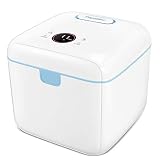
In the past few years, our collective consciousness regarding germs has shifted permanently. We have scrubbed, sprayed, and wiped our way through bottles of disinfectant, often leaving behind chemical residues and a lingering scent of bleach. But there is a cleaner, drier, and more scientifically elegant way to neutralize pathogens: light.
Ultraviolet-C (UV-C) technology, once the domain of hospital operating rooms and municipal water treatment plants, has shrunk down to fit on our kitchen counters. The rise of the UV light sanitizer represents a move away from chemical warfare against germs toward a physical method of inactivation. It doesn’t poison bacteria; it breaks their genetic blueprints.

The Mechanism of Inactivation
To understand why UV-C works, we have to look at the electromagnetic spectrum. UV-C light (specifically at wavelengths around 254 nanometers) is highly energetic. When this light hits a microorganism—whether it’s a bacteria on a pacifier or a mold spore in a CPAP hose—it penetrates the cell wall and disrupts the DNA or RNA.
Think of it like scrambling the code of a computer program. The organism isn’t technically “killed” in the traditional sense; it is inactivated. It can no longer replicate or cause infection. This process leaves no residue, no moisture, and no odor. It is a “dry kill.” Devices like the Papablic 4-in-1 UV Light Sanitizer harness this power using dual Phillips UV-C lamps. These aren’t generic LEDs; they are specialized mercury-vapor bulbs designed to emit the precise wavelength needed for germicidal action. The use of dual bulbs ensures intensity, flooding the chamber with enough photons to ensure that even resilient pathogens are neutralized in an 11-minute cycle.
The Geometry of Shadows
The Achilles’ heel of UV sanitization is shadows. Light travels in straight lines; if a germ is hiding in the shadow of a key or under the lip of a bottle, it survives. This is why the interior design of a sanitizer box is just as critical as the bulbs themselves.
A highly reflective interior is non-negotiable. By lining the chamber with polished stainless steel, the Papablic sanitizer creates a “hall of mirrors” effect. Photons ricochet off the walls, floor, and ceiling, striking items from multiple angles. This 360-degree coverage is essential for complex objects like CPAP masks or breast pump parts, which have nooks and crannies where moisture and bacteria love to hide. While “line of sight” is still the golden rule (you can’t sanitize the inside of a closed book), the reflective geometry maximizes the probability that light will find its target.

Drying: The Unsung Hero of Hygiene
Sanitization is only half the battle; the other half is moisture control. Bacteria thrive in damp environments. A sterilized baby bottle that sits wet on a drying rack is essentially a petri dish waiting to happen.
This is where the “4-in-1” functionality becomes a game-changer. By integrating a dedicated drying mode with a HEPA air filter, modern sanitizers ensure that items come out not just germ-free, but bone-dry. The Papablic unit, for instance, uses low-heat drying to safely evaporate moisture from delicate plastics that might warp in a steam sterilizer. This combination of UV irradiation and warm air drying creates a hostile environment for microbial regrowth, extending the sterile state of the items inside.
Versatility for the Whole Family
The initial market for these devices was anxious new parents, but the utility has expanded far beyond baby bottles. The 10L capacity of the Papablic box turns it into a household utility hub.
- For the Tech-Obsessed: Phones are notoriously dirty, often carrying more bacteria than a toilet seat. A 10-minute UV bath sanitizes them without damaging the sensitive electronics with liquid sprays.
- For the Sleep Apnea Patient: CPAP users face a constant struggle to keep hoses and masks clean. A UV box offers a water-free daily maintenance routine that complements weekly deep cleans.
- For the Everyday: Keys, wallets, glasses, and makeup brushes—anything non-porous that you touch daily can be tossed in the box the moment you walk through the door.

Safety First
UV-C light is harmful to human eyes and skin. It causes what is essentially a sunburn on your corneas. Therefore, safety features are paramount. A well-designed unit must have a fail-safe mechanism. The Papablic model includes a child safety lock and an auto-shutoff sensor that cuts the power to the bulbs the instant the lid is opened. This containment ensures that the germ-killing power stays strictly inside the box, making it safe to use on a kitchen counter surrounded by curious family members.
By adopting UV-C technology, households are moving toward a more clinical standard of hygiene—one that is effective, efficient, and chemical-free. It is a modern solution for a world that has become keenly aware of the invisible.


