 smallapps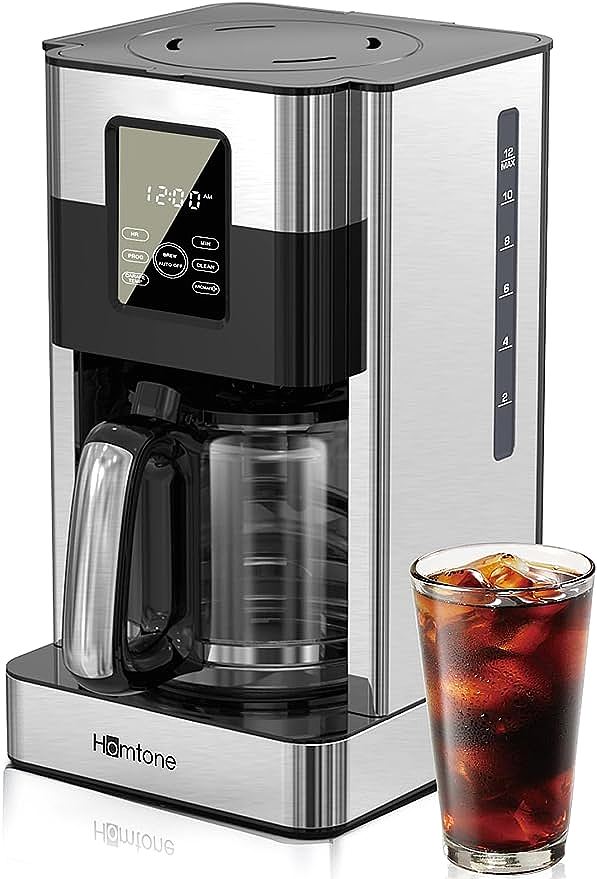

Coffee is a solution. Not just in the metaphorical sense of solving morning fatigue, but in the literal chemical sense: it is a solution of organic compounds dissolved in hot water. The process of creating this solution—brewing—is an exercise in chemistry and physics. While the manual pour-over method is often lauded as the pinnacle of craft, the modern automatic drip coffee maker, exemplified by the Homtone CM1706BAT, is a marvel of automated engineering designed to replicate and even standardize these scientific principles.
To understand why one machine produces a rich, aromatic cup while another yields bitter sludge, we must look beyond the “On” button. We need to explore the hydrodynamics of water distribution, the thermodynamics of heating elements, and the chemistry of filtration. This article dissects the engineering beneath the stainless steel skin of the Homtone, revealing the science of the perfect drip.
The Physics of the Showerhead: Mastering Saturation
The most critical phase in drip coffee brewing is the initial contact between water and grounds. In older or cheaper machines, water often shoots out of a single central hole. This creates a phenomenon known as Channeling.
* The Channeling Problem: Water, being lazy, follows the path of least resistance. A single stream digs a tunnel through the center of the coffee bed. The grounds in the center are over-extracted (releasing bitter tannins), while the grounds at the edges remain dry and under-extracted (sour). The result is an unbalanced cup.
Advanced Showerhead Technology
The Homtone utilizes an Advanced Showerhead design. This is not just a sprinkler; it is a flow distribution system. By dispersing water through multiple nozzles, it mimics the circular pouring motion of a skilled barista.
* Uniform Saturation: The goal is to wet all the coffee grounds simultaneously. This ensures that extraction begins at the same time for every particle.
* Turbulence and Agitation: The gentle rain-like flow creates mild turbulence, agitating the grounds just enough to ensure they are fully suspended in the water, maximizing the surface area available for extraction without packing the bed down too tightly.

Thermodynamics of Brewing: The Golden Zone
Temperature is the accelerator of extraction. The solubility of coffee compounds varies with heat.
* Acids and Fruit Notes: Dissolve quickly, even at lower temperatures.
* Sugars and Caramels: Require moderate heat.
* Bitter Tannins and Fibers: Dissolve only at high temperatures or with prolonged exposure.
The SCA (Specialty Coffee Association) defines the “Golden Cup” standard temperature range as 195°F to 205°F (91°C – 96°C).
* The 1000W Engine: The Homtone’s 1000-Watt heating element is crucial here. Low-power machines often struggle to flash-heat water fast enough, delivering it to the basket at only 180°F. This results in sour, weak coffee. 1000W provides the thermal energy needed to bring the water to the optimal 195°F+ range instantly as it travels up the lift tube, ensuring that extraction occurs in the sweet spot where sweetness and body are maximized, but bitterness is minimized.
Aroma Control Science: Manipulating Time
The Homtone features an Aroma Control function. Scientifically, this is a manipulation of Contact Time.
* Standard Brew: Water flows through the grounds at a standard rate, ideal for a balanced cup.
* Aroma Mode (Strong): To increase strength, you don’t just add more coffee; you increase the extraction yield. The Aroma function likely utilizes a Pulse Brewing algorithm. Instead of a continuous stream, the machine releases water in cycles—flow, pause, flow.
* The Bloom: The pause allows the grounds to swell and release CO2 (blooming), which prepares them to accept water more readily.
* Extended Contact: By slowing the overall flow rate, the water spends more time in contact with the coffee. This pulls out more dissolved solids (higher TDS), resulting in a “stronger,” more intense flavor profile without changing the coffee-to-water ratio.

Filtration Physics: Metal vs. Paper
The Homtone comes with a Permanent Stainless Steel Filter. This choice fundamentally changes the chemistry of the cup compared to paper filters.
* Lipids and Body: Coffee beans contain natural oils (diterpenes like cafestol and kahweol). These oils carry many of the volatile aromatic compounds and provide the “mouthfeel” or body of the coffee. Paper filters are absorbent; they trap most of these oils, resulting in a clean, light-bodied cup.
* The Metal Mesh: The stainless steel mesh allows these oils to pass through into the carafe. The result is a coffee with a heavier body, a richer texture, and a more complex aroma profile. It mimics the profile of a French Press but with the convenience of a drip machine. However, it also allows some microscopic “fines” (sediment) to pass, which some drinkers enjoy for the added texture, while others find gritty. Understanding this trade-off allows the user to choose: use the permanent filter for a bold, oily cup, or insert a paper filter for a crisp, clean cup.
Conclusion: The Automated Chemist
The Homtone CM1706BAT is more than a convenience appliance; it is an automated chemist. It controls the critical variables of extraction—dispersion (Showerhead), temperature (1000W Heater), time (Aroma Control), and filtration (Permanent Filter).
By understanding the physics behind these features, users stop being passive consumers of caffeine and become active participants in the brewing process. They can dial in the “Aroma” setting to match a light roast’s need for longer extraction or appreciate the rich body provided by the steel filter. It transforms the morning routine from a chore into a daily experiment in applied science.


