smallapps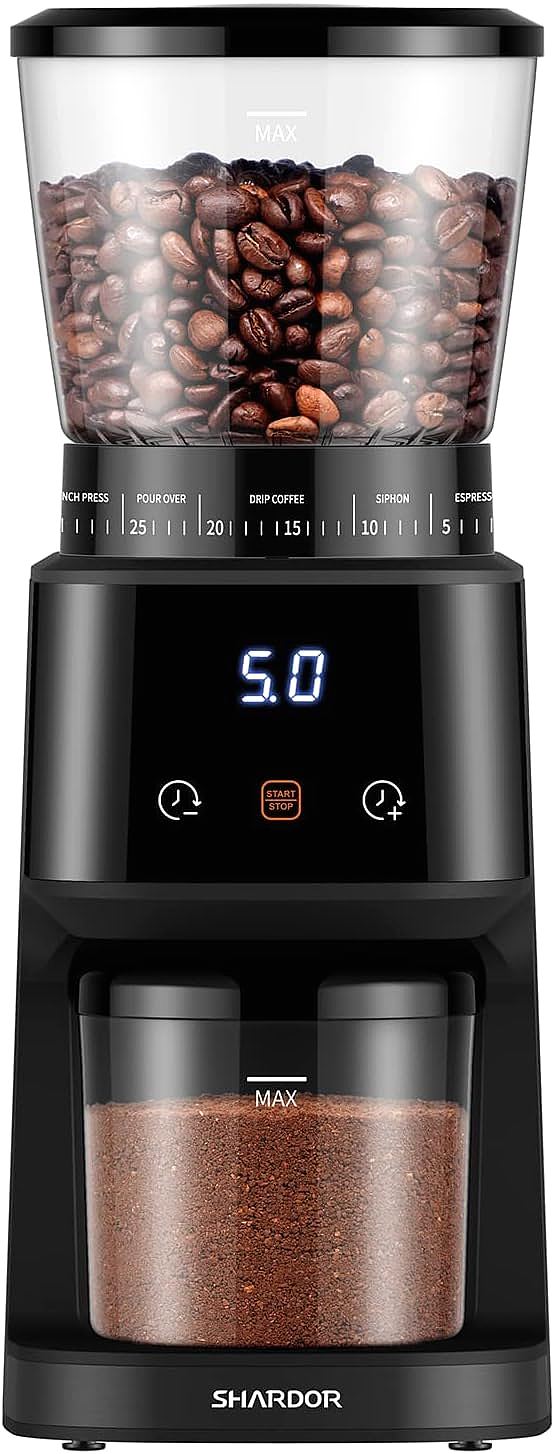
In the equation of the perfect cup of coffee, the grinder is often the most critical variable. While the brewer controls the environment (temperature, time), the grinder controls the reactant: the surface area of the coffee bean.
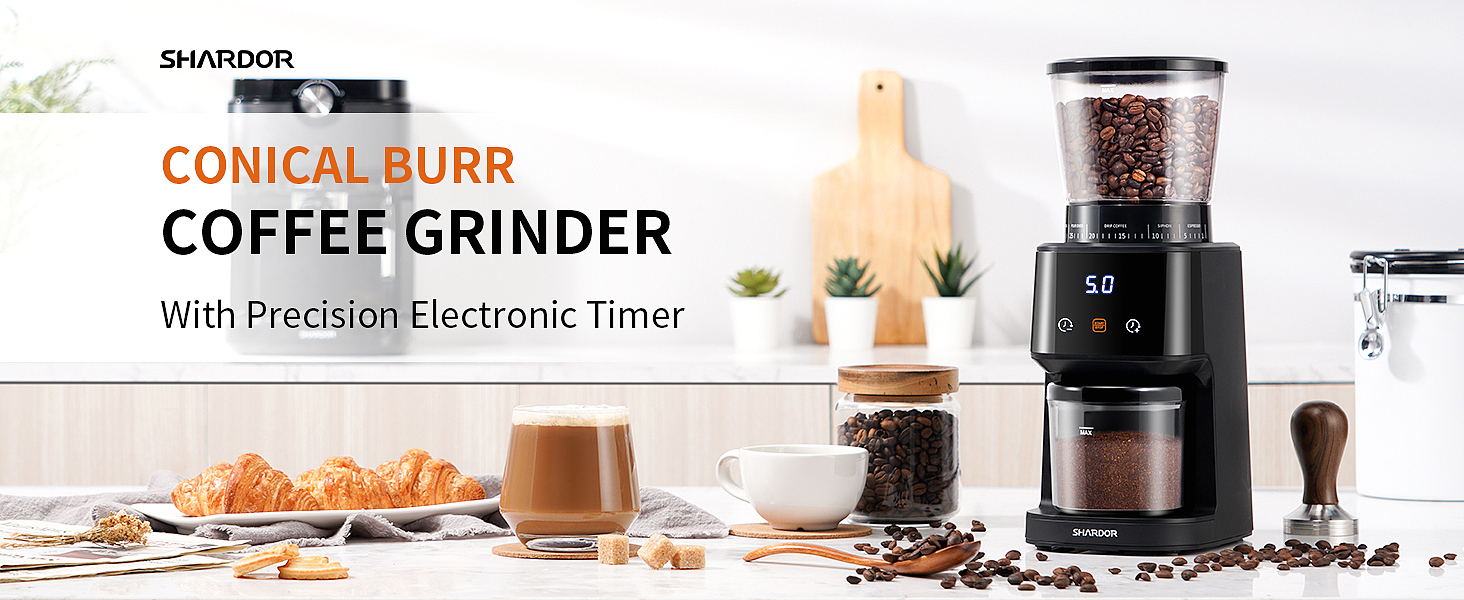
To the uninitiated, a grinder simply crushes beans. To the engineer or the barista, a grinder is a precision instrument responsible for Particle Size Distribution (PSD). The SHARDOR BD-CG015 Conical Burr Coffee Grinder offers a compelling case study in how mechanical design influences extraction kinetics, and how physical phenomena like static electricity present challenges that can be managed through science.
The Geometry of Flavor: Conical Burrs and Bimodal Distribution
The core mechanism of the SHARDOR BD-CG015 is a set of 40-millimeter Stainless Steel Conical Burrs. Why does the shape of the steel matter? Because it dictates the statistical distribution of the ground particles.
Shear vs. Impact
Cheap blade grinders operate on impact, shattering beans randomly. This creates “dust” (over-extracted/bitter) and “boulders” (under-extracted/sour) simultaneously.
Conical burrs operate on shear. The beans are drawn into the narrowing gap between the rotating cone and the stationary ring, fracturing them systematically.
The Bimodal Advantage
Conical burrs are renowned for creating a Bimodal Distribution.
* Peak 1 (Main Grind): The target particle size (e.g., medium for drip) that provides the bulk of the flavor structure.
* Peak 2 (Fines): A smaller, deliberate percentage of fine particles.
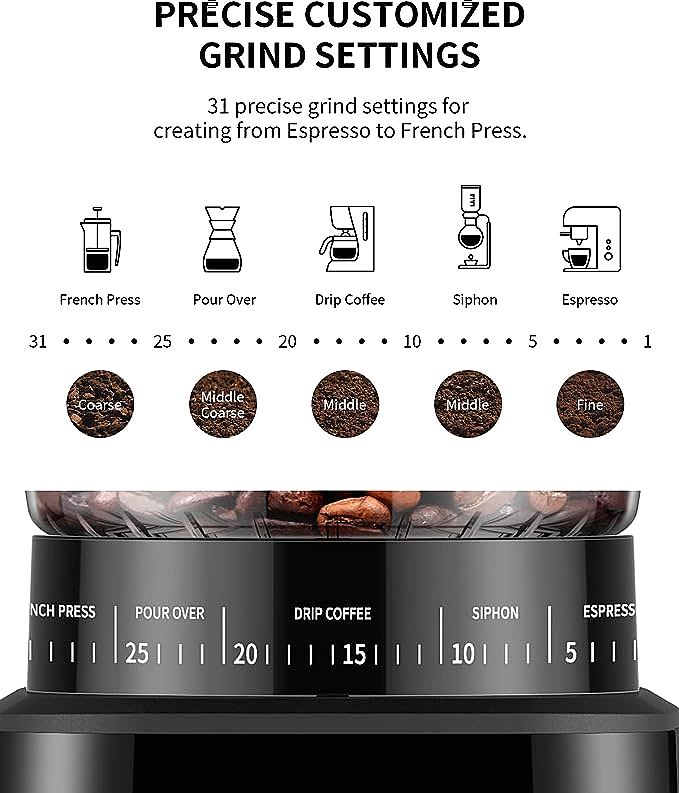
Unlike flat burrs which strive for extreme uniformity (Unimodal), the bimodal profile of conical burrs like the SHARDOR’s provides “texture” and “body” to the coffee. The fines slow down the water flow slightly and contribute to mouthfeel, while the main grind ensures clarity. This makes conical burrs particularly forgiving and versatile for methods ranging from French Press to Espresso.
The Invisible Force: Triboelectricity and the “Mess”
A common critique in user feedback for many grinders, including this unit, is the “mess” caused by grounds sticking to the bin or flying onto the counter. This is not necessarily a defect, but a manifestation of the Triboelectric Effect.
The Physics of Static
When coffee beans (an insulator) are fractured against steel or plastic (other insulators/conductors) at high speed, electrons are transferred. The dry environment of a grinder generates a significant Electrostatic Charge.
* The Problem: The charged coffee particles repel each other and attract to neutral surfaces (like the plastic bin or your countertop).
* The SHARDOR Context: The BD-CG015 uses a plastic catch cup. Plastic is a notorious electrical insulator, meaning it holds the charge rather than dissipating it.
* The Solution (RDT): Smart users apply the Ross Droplet Technique. Adding a single droplet of water to the beans before grinding increases surface humidity, creating a conductive path for the charge to dissipate. This simple physics hack virtually eliminates the “mess” reported in reviews.
Precision Dosing: The Variable of Time
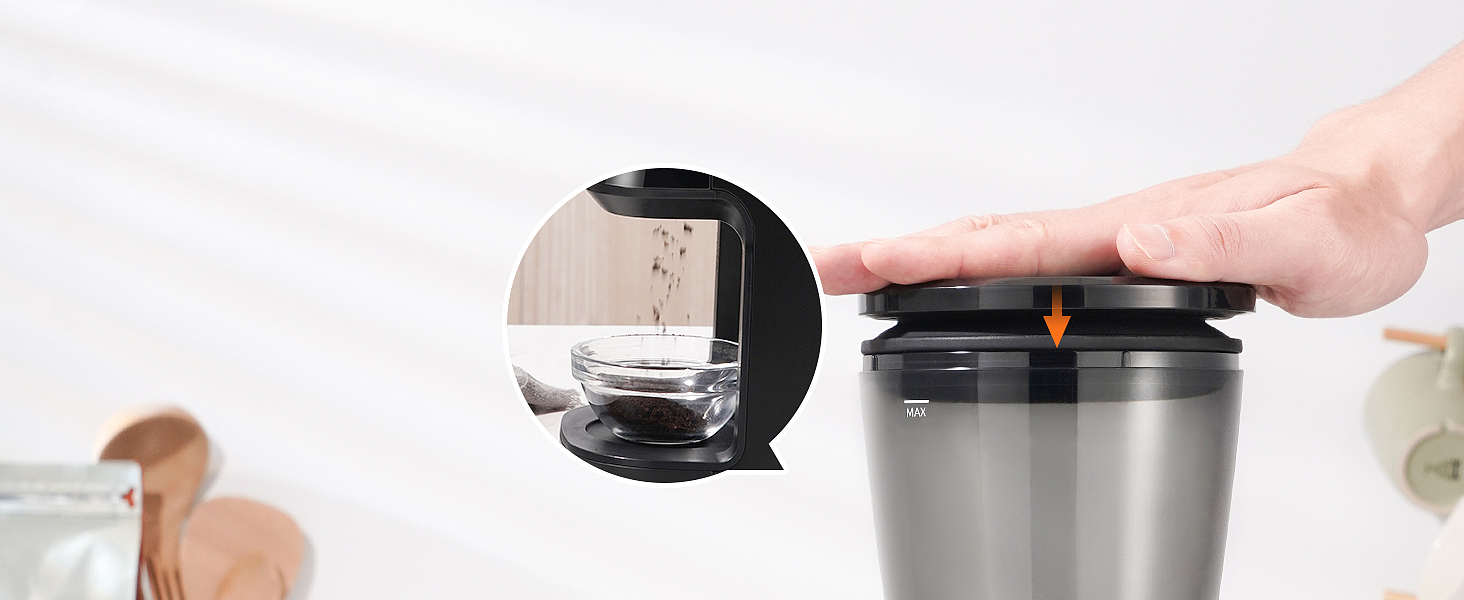
Consistency in coffee is about repeating variables. The SHARDOR BD-CG015 integrates a Digital Timer into its workflow.
Flow Rate Constancy
Assuming the motor speed (RPM) is constant and the bean hopper is full (providing consistent gravity pressure), the rate of grinding (grams per second) remains relatively stable for a given grind setting.
* Time = Mass: By setting the timer, you are effectively dosing by mass. If 14 seconds yields 18 grams of coffee today, it will likely yield 18 grams tomorrow.
* Eliminating Variables: This removes the human error of “eyeballing” the amount, ensuring that your coffee-to-water ratio—the fundamental driver of strength—remains locked in.
Thermal Management: Protecting the Volatiles
The aroma of coffee is composed of highly volatile organic compounds. Heat is their enemy.
The 150W (or 165W) DC motor used in the SHARDOR unit is designed for torque, not just speed. High-speed AC motors can heat up the burrs, transferring that heat to the coffee oils and beginning the oxidation process before brewing even starts. By using a reduction gear system (typical in conical designs), the burrs spin slower, minimizing friction heat and preserving the integrity of the bean’s essential oils.
Conclusion: The Gateway to Extraction Mastery
The SHARDOR BD-CG015 is more than a kitchen appliance; it is a tool for controlling chaos. By fracturing beans into a predictable Bimodal Distribution, it allows the home barista to access a level of extraction uniformity impossible with blades.
While the laws of physics (specifically electrostatics) present challenges like static cling, understanding the science allows users to mitigate these issues and focus on what matters: the precise geometry of the grind and the resulting clarity in the cup.