smallapps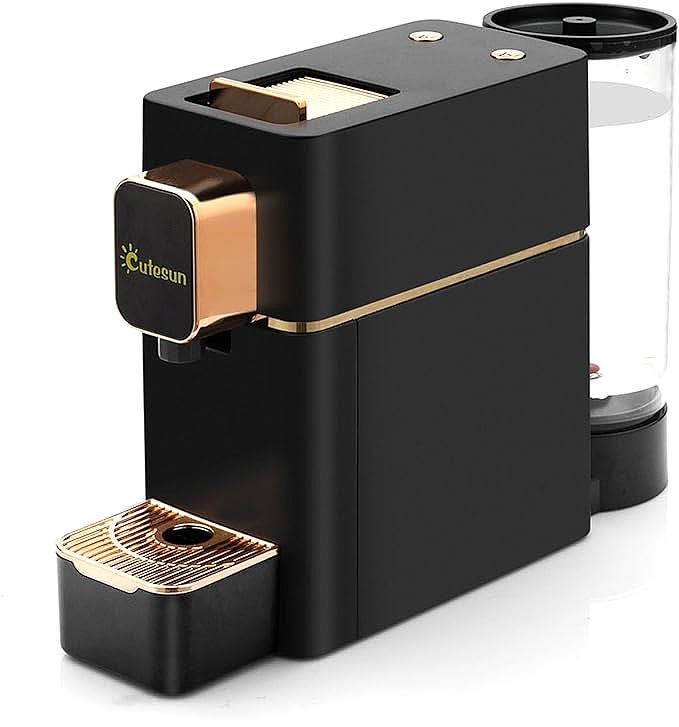
The allure of espresso lies in its intensity. It is coffee amplified—a concentrated elixir that captures the very soul of the bean in a few viscous ounces. For over a century, creating this beverage was the exclusive domain of skilled baristas wielding massive, steam-hissing machines. It required a deep understanding of grind size, tamping pressure, and extraction timing.
Today, machines like the cutesun cute-826 have democratized this art form. By encapsulating the variables of coffee preparation into a standardized pod and automating the physics of extraction, they allow anyone to produce a café-quality shot with a single button press. But make no mistake: the simplicity of the user interface belies the complex engineering occurring inside. To truly appreciate the modern single-serve espresso machine, one must delve into the fluid dynamics of high-pressure extraction, the thermodynamics of brewing, and the chemistry of the perfect crema.
The Physics of 19 Bar: Why More Pressure Matters
In the world of professional espresso machines, 9 Bar is often cited as the magic number. It is the pressure required to emulsify oils and extract flavors optimally from a traditional portafilter. So why does the cutesun cute-826 boast a 19 Bar (High-Performance) pump? Is it marketing hyperbole, or is there a sound engineering reason?
Compensating for Resistance
The answer lies in the architecture of the capsule. Unlike a loose bed of coffee in a commercial portafilter, a capsule is a sealed, pre-packed environment.
* The Puncture Force: The machine must first pierce the capsule.
* The Hydraulic Path: Water must then be forced through a restrictively small inlet, permeate the densely packed grounds (which are often ground finer than standard espresso to maximize surface area in a small volume), and then burst through the foil lid against a relief valve or pyamid plate.
* Pressure Drop: Each of these steps creates significant hydraulic resistance. The 19 Bar pump provides the necessary “headroom.” It ensures that after overcoming all these mechanical and fluid obstacles, the water actually hitting the coffee grounds is at the optimal 9-10 Bar required for perfect extraction. It is a classic case of engineering overkill to ensure operational reliability.
The Speed of Extraction
This high pressure also facilitates speed. The cutesun machine brews a standard espresso in just 35 seconds. This rapid throughput is critical. If water lingers too long in the grounds (over-extraction), it begins to dissolve harsh tannins and woody fibers, ruining the flavor. The 19 Bar pump ensures the water moves fast enough to capture the sweet, aromatic oils but leaves the bitter compounds behind.

Thermodynamics of the Brew: The Golden Window
Pressure extracts, but temperature defines. The flavor profile of coffee is chemically complex, consisting of acids, sugars, and alkaloids. Each of these compounds has a different solubility at different temperatures.
The 90-92°C Sweet Spot
The cutesun cute-826 is calibrated to maintain a brewing temperature of 90-92°C (194-197.6°F). This is not arbitrary.
* Acidity vs. Bitterness: Below 90°C, the extraction of acidic compounds dominates, leading to a sour, underextracted cup. Above 95°C, the heat begins to degrade the chlorogenic acids into quinic acid and caffeic acid, creating astringency and burnt flavors.
* Thermal Stability: The 1400W heating element acts as a Thermoblack system. Unlike a traditional boiler that keeps a large volume of water hot, a thermoblock heats water on demand as it passes through a narrow channel. This allows for rapid startup (ready in seconds) and precise control. The challenge in such compact systems is maintaining that temperature throughout the shot. The cutesun’s engineering ensures that the first drop and the last drop fall within this narrow “Golden Window,” ensuring a balanced, rounded flavor profile.
The Capsule Ecosystem: Engineering Consistency
The heart of this system is the capsule itself. It is a marvel of food preservation engineering.
* Inert Atmosphere: Freshly ground coffee oxidizes within minutes, losing its volatile aromatics (the “nose” of the coffee). Capsules are nitrogen-flushed and hermetically sealed. This creates a time capsule, preserving the coffee’s peak freshness for months.
* The Grind Matrix: Inside the capsule, the coffee is not just thrown in. The particle size distribution is carefully engineered to provide the correct resistance to the 19 Bar water flow. If the grind were too coarse, the water would rush through (channeling), resulting in weak, watery coffee. If too fine, it would choke the machine. The compatibility of the cutesun with Nespresso OriginalLine means it taps into a vast library of these pre-engineered flavor profiles, guaranteeing consistency that is hard to replicate manually.

Crema Mechanics: The Foam of Quality
The defining visual characteristic of espresso is Crema—the reddish-brown foam sitting atop the shot. The cutesun cute-826 claims to produce crema over 3mm thick. This is not just aesthetic; it is physics.
The Emulsion of Gas and Oil
Crema is a colloid—a mixture of gas, liquid, and solid.
1. CO2 Release: Roasted coffee contains trapped Carbon Dioxide. Under the 19 Bar pressure, this gas dissolves into the water.
2. Depressurization: As the coffee exits the machine and hits the cup (returning to 1 Bar atmospheric pressure), the CO2 comes out of solution, forming microscopic bubbles.
3. Oil Coating: The natural oils in the coffee (lipids) coat these bubbles, stabilizing them.
4. Suspension: Fine coffee particles (fines) and melanoidins (browning pigments) are suspended in this foam, giving it color and texture.
A thick, persistent crema indicates three things: sufficient pressure was applied, the temperature was correct (too cold = thin crema), and the coffee was fresh (stale coffee has lost its CO2). It acts as a “flavor lid,” trapping the volatile aromatics in the cup until the first sip breaks the seal.
Conclusion: The Automated Artisan
The cutesun cute-826 is more than a convenience appliance; it is a precision instrument. By automating the critical variables of pressure (19 Bar) and temperature (90-92°C), it removes the variance of human error. It allows the home user to bypass the steep learning curve of traditional espresso making and jump straight to the enjoyment of the final product.
In doing so, it shifts the focus from the process of making coffee to the experience of tasting it. It proves that with the right engineering, the complex physics of extraction can be compressed into a footprint no wider than a smartphone, bringing the Italian café experience into the smallest of modern kitchens.